
Which Balayage Are You?
Which Balayage Are You?
Five signature tones, each designed for a different skin tone, lifestyle, and personality. Find yours.
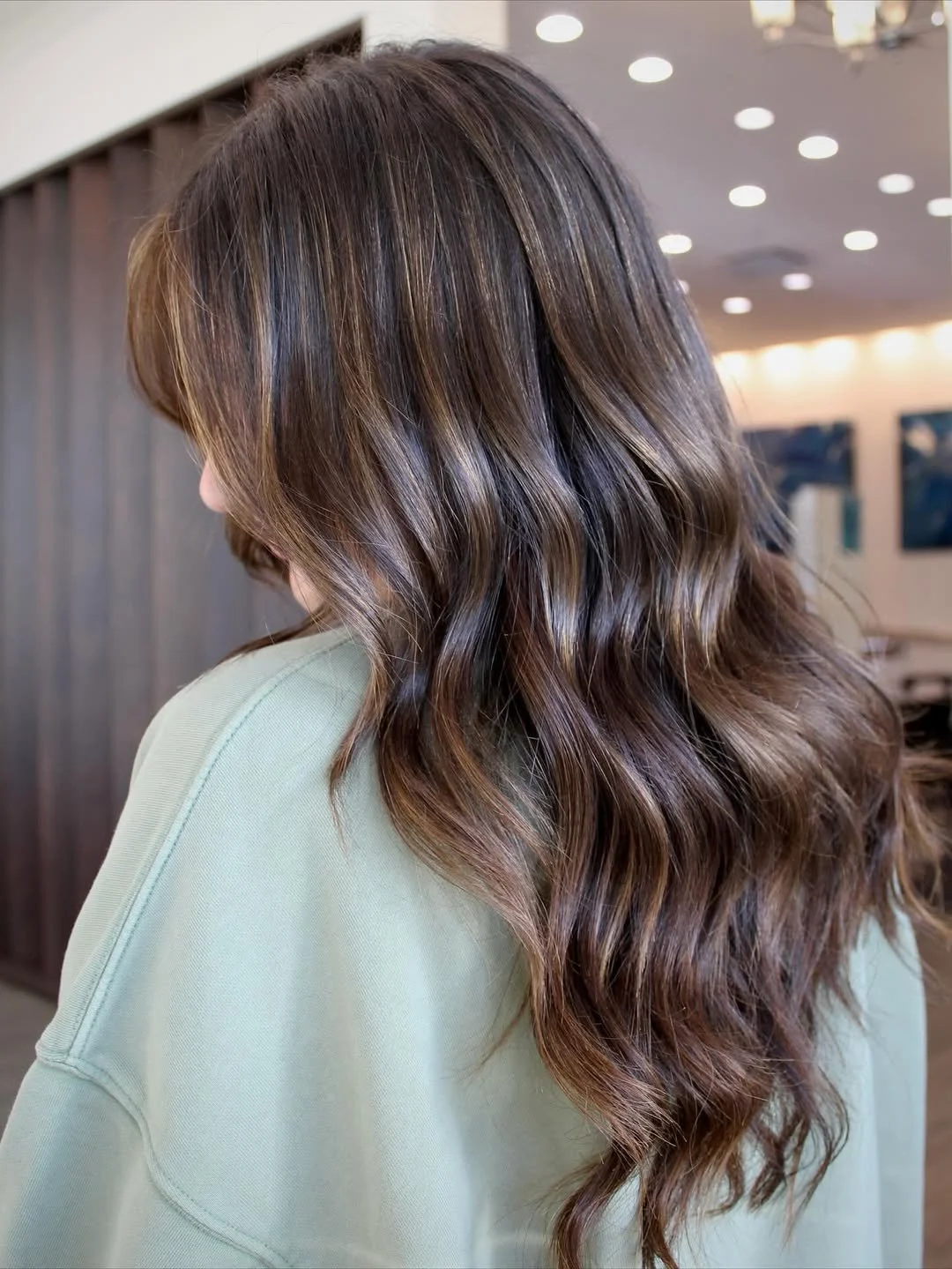
You already know you want balayage. Maybe you've even decided on a technique — classic, foilayage, or reverse. But the question that actually determines how your hair color looks is this: what tone? The difference between a warm honey balayage and an icy platinum balayage is enormous — even when the same freehand painting technique is used for both. Your tone is what makes your balayage look expensive, flattering, and uniquely yours.
Our Aveda colorists at Tangerine Salon customize tone for every single guest based on skin undertone, natural hair color, eye color, and lifestyle. There's no one-size-fits-all blonde — and there shouldn't be. Here's how to start narrowing down the balayage tone that's right for you before your consultation.
Five Balayage Tones to Know
Rich amber and golden tones that catch the light beautifully. This balayage creates a sun-drenched warmth that complements olive, medium, and deeper skin tones. It's the most forgiving tone for brunettes who are lightening for the first time — the warm undertones blend naturally with darker bases.
Best for: Olive or warm skin tones, brunettes going lighter for the first time Maintenance: Low — warmth fades gracefullyZero warmth, zero brassiness — a clean, icy blonde that reads as polished and modern. This is the hardest tone to achieve and maintain, requiring precise lifting and regular toner refreshes. But when it's done right, nothing looks more striking. Aveda's Blue Malva shampoo is essential for keeping this tone clean between visits.
Best for: Fair or cool-toned skin, clients committed to regular maintenance Maintenance: High — toner refresh every 4–6 weeksThe perfect middle ground — not too warm, not too cool. Vanilla balayage sits in the neutral zone with soft beige and cream undertones that flatter virtually every skin tone. It's the shade most people picture when they think of "natural blonde" and the most requested tone across all five of our locations.
Best for: Nearly every skin tone — the universal crowd-pleaser Maintenance: Medium — toner every 6–8 weeksHalf brunette, half blonde — the "bronde" balayage keeps your darker base intact while weaving in caramel, toffee, and honey ribbons of light. The result is multidimensional and rich, with a natural contrast that reads as expensive without looking like you tried. This is the ideal entry point for brunettes who don't want to commit to full blonde.
Best for: Natural brunettes wanting dimension without going full blonde Maintenance: Very low — grows out beautifully over 4–5 monthsIntentionally rooty with a 2-to-3-inch shadow root that blends into lighter lengths. This is balayage designed to look like it's been growing out for weeks — on purpose. The shadow root eliminates any harsh line of demarcation and means your color looks just as good at month four as it did on day one. It's the lowest-maintenance option and pairs perfectly with Bellami extensions because the rooty base provides natural blending at the attachment points.
Best for: Anyone prioritizing low maintenance; extension clients wanting seamless blending Maintenance: Lowest — 4 to 5 months between full appointmentsHow to Match Balayage to Your Skin Tone
The golden rule of balayage color: your hair tone should complement your skin's undertone, not compete with it. Here's the framework our Dallas, Coppell, and Frisco colorists use during every consultation.
How to find your undertone: Look at the veins on the inside of your wrist in natural light. If they appear blue or purple, you likely have cool undertones. If they look green, you lean warm. If you see both, you're neutral — the luckiest group, because almost every balayage tone will work.
| Skin Undertone | Best Balayage Tones | Tones to Approach Carefully | DCC Example |
|---|---|---|---|
| Warm | Warm honey, bronde, vanilla cream | Cool platinum can wash out warm skin | Many DCC veterans wear warm honey or vanilla |
| Cool | Cool platinum, vanilla cream, lived-in rooty | Very warm gold can clash with pink undertones | Rookies often start with cool platinum for max impact |
| Neutral | Any tone — vanilla cream and bronde are especially flattering | No restrictions — your colorist has full creative freedom | Neutral skin gives colorists the widest palette |
| Deep / Olive | Warm honey, bronde, lived-in rooty | Platinum requires multiple sessions and careful toning | Darker-complexioned DCC members often wear rich bronde |
During DCC Makeover Day, our colorists customize balayage tone for each Dallas Cowboys Cheerleader based on skin tone, stage lighting, and camera angles. It's never one shade for the whole squad. That same personalized approach — minus the stadium lights — is exactly what you'll get at your consultation.
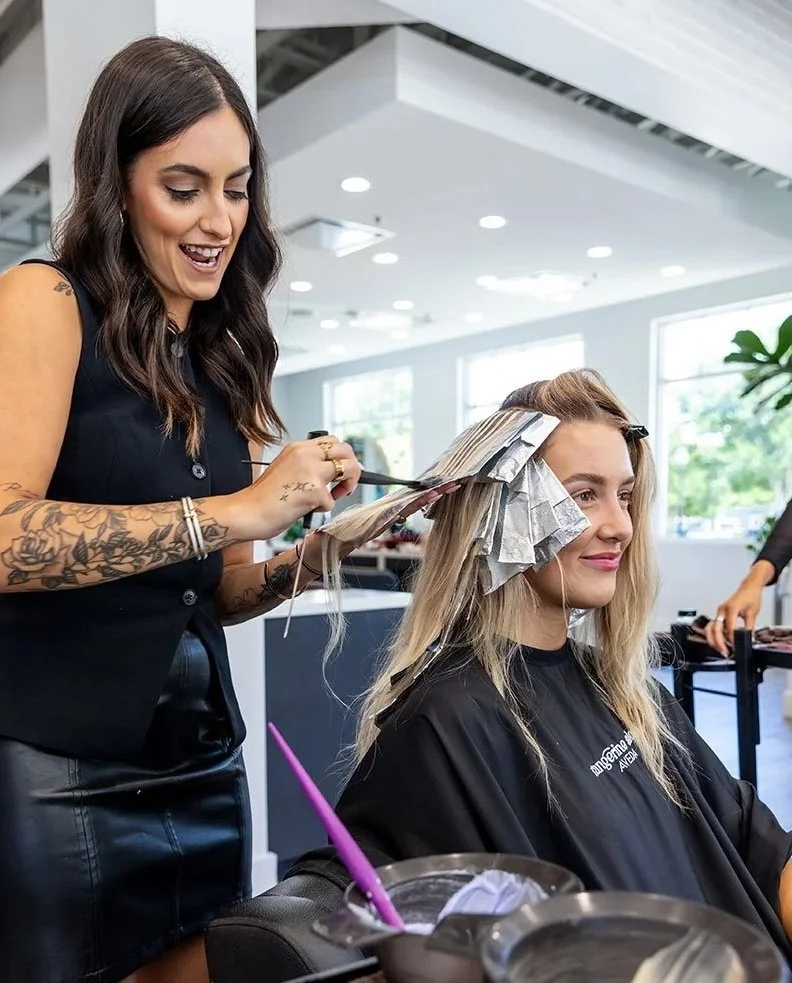
A personalized balayage consultation at Tangerine Salon
Four Factors That Affect Your Balayage Tone
Your Natural Base Color
The lighter your starting point, the wider your tonal range. A natural level-7 (dark blonde) can reach cool platinum in a single session. A level-3 (dark brown) may need two or three sessions of foilayage to achieve the same brightness — and warm honey or bronde will likely be the most flattering stopping points along the way. Your colorist will map a realistic timeline based on where you're starting and where you want to end up.
Your Maintenance Commitment
Cool and icy tones demand the most upkeep — toner refreshes every 4 to 6 weeks, purple shampoo discipline, and sensitivity to hard water and chlorine. Warm and bronde tones are the most forgiving; they fade gracefully and still look intentional months after your appointment. Lived-in rooty balayage is purpose-built for the client who wants to visit the salon only 2 to 3 times per year. For a full breakdown of aftercare by tone, see our balayage aftercare guide.
Your Hair's History
Previous color, heat damage, and chemical treatments all affect how your hair lifts and holds tone. Hair that has been box-dyed dark, for example, contains metallic salts that react differently to lightener than virgin hair does. Your colorist will assess this during the consultation and adjust the formula accordingly. Aveda's Botanical Repair™ bonding treatment is included with every balayage service to protect and rebuild the hair structure during the lightening process.
Your Lifestyle
If you're outdoors in the Texas sun frequently, warm tones will hold up better than cool ones — UV breaks down violet toner molecules first. If you swim regularly, platinum is the highest-risk tone (chlorine turns it green). And if you want to pair your balayage with Bellami Professional extensions, a lived-in rooty tone gives your extension specialist the most flexibility for seamless color matching. Learn more about that pairing in our extensions transformation guide.
What Happens During a Balayage Consultation
Every new balayage client at Tangerine starts with a consultation — either in-salon or virtually. Here's what your colorist will cover:
Visual assessment. Your colorist examines your natural color, previous color history, hair condition, and texture. They'll look at how your hair lifts (some hair pulls warm, some lifts clean) and identify any areas that need special attention.
Skin tone analysis. Using the undertone framework above, your colorist determines which tonal family — warm, cool, or neutral — will be most flattering on you. They'll often hold swatches near your face for comparison.
Inspiration review. Bring 3 to 5 photos of hair color you love. Your colorist can identify the exact tones in each photo and tell you which are achievable on your hair and which might need modification. A screenshot from Instagram is worth a thousand words in the consultation chair.
Timeline and pricing. Based on all of the above, your colorist maps out whether you can reach your goal in one session or two, what the service will cost, and what your maintenance schedule will look like going forward. No surprises.
Consultations are complimentary at all five locations. Book yours at Dallas, Frisco, Coppell, Allen, or Highland Village.
Frequently Asked Questions
Can I switch balayage tones at my next appointment?
Yes — this is one of the biggest advantages of working with Aveda color. Your colorist can shift your tone warmer or cooler with a toner adjustment, often within the same appointment. Going from warm honey to cool platinum requires additional lifting, but shifting between neighboring tones (vanilla to warm honey, for instance) is a quick toner swap.
What if I don't know my skin's undertone?
That's exactly what the consultation is for. Our colorists at Dallas, Coppell, Frisco, Allen, and Highland Village are trained to assess undertone in person — it's one of the first things they do. The vein test above is a good starting point, but professional eyes catch nuances that photos and self-assessment miss.
Which balayage tone lasts the longest without maintenance?
Lived-in rooty balayage and bronde are the lowest-maintenance tones because the intentional root shadow means grow-out looks natural rather than neglected. Clients with these tones often go 4 to 5 months between full appointments. Cool platinum requires the most frequent maintenance, with toner refreshes every 4 to 6 weeks. For more details, read our aftercare guide.
Is there a difference between balayage tone and balayage technique?
Yes — and understanding both is key to getting the result you want. Technique refers to how the lightener is applied (classic, foilayage, reverse, face-framing). Tone refers to the color temperature of the finished result (warm, cool, neutral). Our technique guide covers the application side. This page covers the tonal side. Your colorist combines both to create your custom balayage formula.
Does balayage hair color work on dark hair?
Absolutely. Bronde and warm honey tones are particularly stunning on darker bases because they create visible contrast without requiring extreme lifting. For darker hair that wants maximum brightness, foilayage provides the extra lifting power while maintaining a blended, natural grow-out. Your colorist at any Tangerine location can map a session plan that protects your hair's health while achieving your target shade. See what's possible in our balayage vs. highlights guide.
Find Your Balayage Tone
Complimentary consultations at all five locationsReady to Find Your Shade?
Every balayage at Tangerine starts with a personalized consultation. Your colorist will assess your skin tone, hair history, and goals — then recommend the ideal tone and technique for you.
Book Your Consultation