
Scalp Care 101: Combat Dandruff, Itchiness, and Flakes for a Healthy Head
Your Scalp Is Your Foundation
Dandruff, itchiness, excess oil, and flaking all have specific causes — and specific fixes. Here's how to read what your scalp is telling you and build a routine that keeps it healthy long-term.
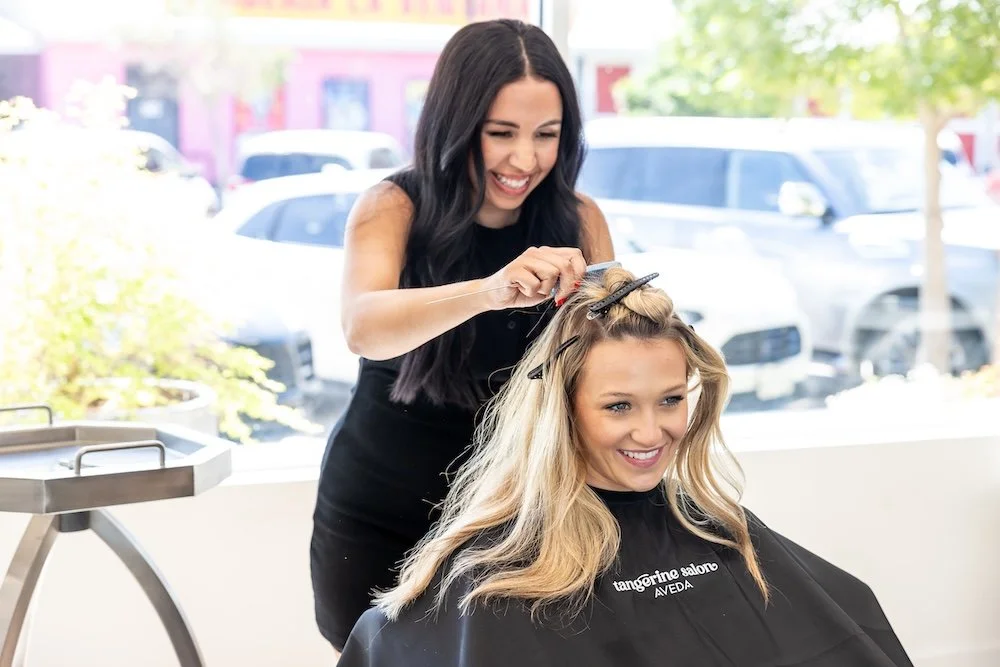
Healthy hair starts at the scalp — not at the ends. Yet scalp care is almost always the most neglected part of a hair routine. Most people focus entirely on the hair itself: the right shampoo for their texture, the right mask for their damage, the right product for their style. The scalp, which produces the oils that condition the hair, regulates the follicle environment that determines how your hair grows, and provides the literal foundation for everything that comes out of it — gets almost no attention until something goes wrong.
Something usually goes wrong in the form of dandruff, an itchy scalp, visible flaking, or persistent oiliness that no shampoo seems to fix. These are not random — they are symptoms of specific imbalances, each with a distinct cause and a distinct solution. This guide, built on what our Aveda stylists across all five Tangerine locations tell clients every day, walks through every major scalp condition, what causes it, and what actually treats it.
The Four Most Common Scalp Conditions — and What Causes Each One
Before reaching for any product, it helps to correctly identify what you're dealing with. Dry scalp, dandruff, and seborrheic dermatitis are frequently confused for one another — and treating the wrong condition makes things worse, not better. Here's a precise breakdown of each.
Dry scalp occurs when the scalp lacks sufficient moisture — the same way skin anywhere on the body becomes dry in cold weather, low humidity, or after over-stripping with harsh cleansers. The scalp's natural oil production (sebum) may be normal, but the skin itself is dehydrated and begins to flake as dead cells shed faster than usual.
How to tell: Small, white, dry flakes that fall freely. Scalp feels tight or itchy — especially in winter or low-humidity environments. Hair may look dull. Condition worsens with frequent washing or sulfate-heavy shampoos.True dandruff — clinically called pityriasis capitis — is caused by an overgrowth of a naturally occurring yeast called Malassezia on the scalp. This yeast feeds on sebum, and when it proliferates, it irritates the scalp and accelerates the skin cell turnover cycle, producing the characteristic flakes. Unlike dry scalp, dandruff is associated with an oily rather than dry scalp environment.
How to tell: Larger, oily-looking yellowish or white flakes that tend to stick to the hair and scalp. Scalp may feel oily at the root even if the ends are dry. Itching can be intense. Condition may worsen in stress periods or with infrequent washing.Seborrheic dermatitis is a chronic inflammatory skin condition that presents similarly to dandruff but is more persistent and more widespread. It affects areas with high sebaceous (oil) gland activity — the scalp, eyebrows, sides of the nose, and chest. It's caused by an interaction between Malassezia yeast and the immune system's response to it, making it more resistant to standard dandruff treatments.
How to tell: Thick, greasy, yellowish scales that may form crusts. Redness and visible inflammation on the scalp. May appear on eyebrows or behind the ears simultaneously. Recurring cycles of flare-ups and remission. A dermatologist visit is recommended for persistent cases.Product buildup occurs when styling products, dry shampoo, heavy conditioners, or silicone-based formulas accumulate on the scalp and hair shaft faster than regular washing removes them. The result is a coating that traps dead skin cells, blocks follicles, and creates a dull, heavy, sometimes itchy scalp environment that mimics dandruff symptoms without the same underlying cause.
How to tell: Hair feels heavy or coated even after washing. Scalp appears dull or slightly grey at the root. Light flaking that does not resolve with standard shampoo but clears completely after a clarifying treatment. Worsens with dry shampoo or heavy styling product use.How Aveda Pramasana™ Treats Scalp Imbalance at the Source
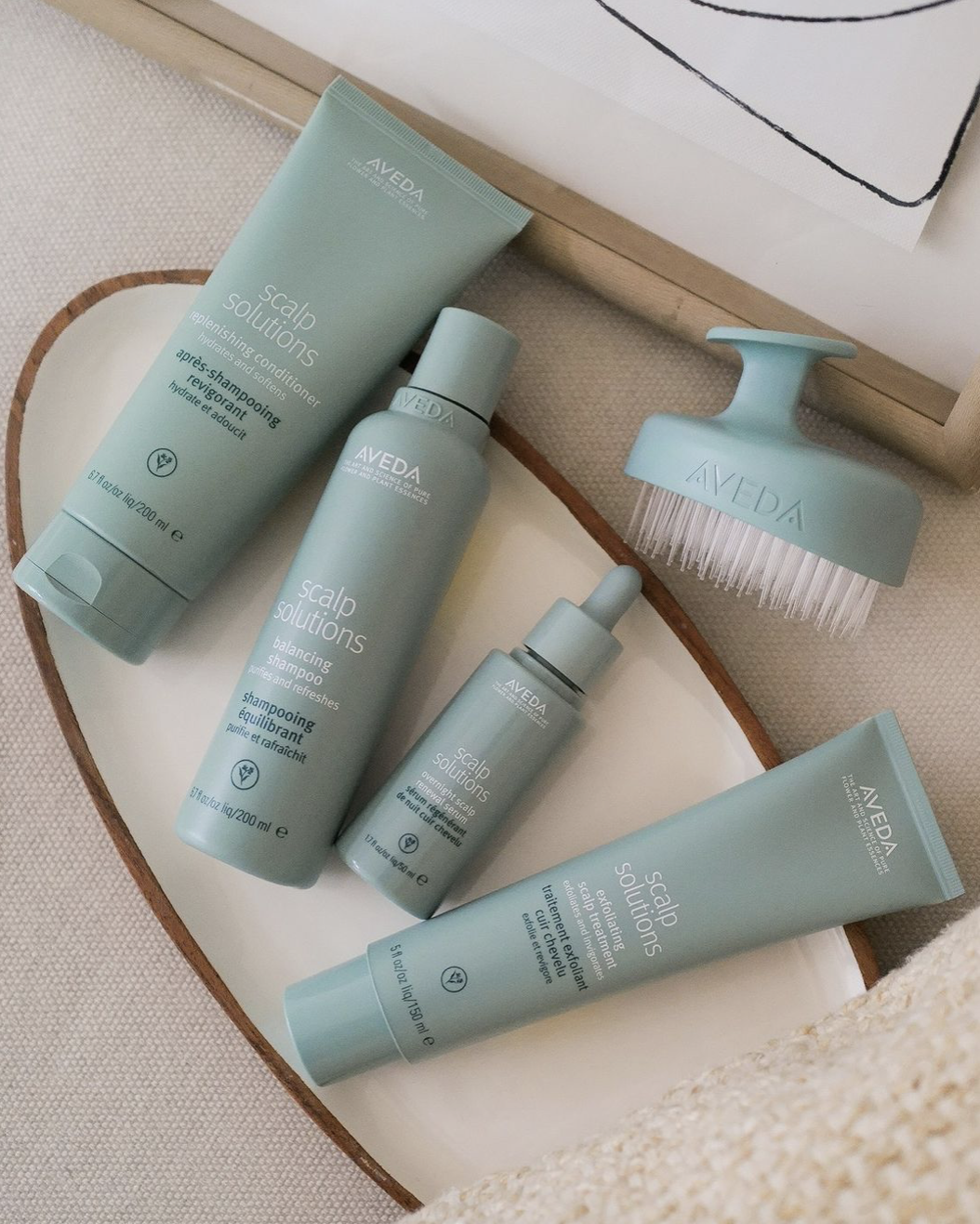
Aveda's Pramasana™ collection is the scalp-specific line within the Aveda system — and it's the line our stylists reach for when a client's scalp needs more than a basic shampoo switch. Unlike most scalp treatments that address symptoms (the flaking, the itch) without correcting the underlying condition, Pramasana™ works at the level of the scalp's microbiome — the community of bacteria and yeast that live on healthy skin and regulate its balance.
The line uses a blend of certified organic peppermint, spearmint, and wintergreen to stimulate circulation and address the buildup conditions that throw the scalp microbiome off balance. It's formulated without sulfates that strip the scalp's natural moisture barrier — the single most common cause of the dry-scalp-then-overcompensates-with-oil cycle that keeps so many people stuck in a loop of bad scalp days. Here's how each product fits into a complete scalp routine.
A pre-shampoo scalp treatment applied directly to the dry or damp scalp before washing. It gently lifts buildup, excess sebum, and dead skin cell accumulation from the scalp surface — clearing the follicle environment before the shampoo step. Used weekly (or after heavy styling product use), it prevents the buildup cycle from establishing itself. Massage into the scalp and leave for 5 minutes before washing.
Used during shampooing to physically exfoliate the scalp surface, the brush removes dead skin cells and loosens product residue while simultaneously boosting blood circulation at the follicle. Better circulation means healthier follicles and improved hair growth over time. Soft silicone bristles are gentle enough for daily use and safe on all scalp types, including post-color treated scalps.
A leave-in scalp serum applied post-wash that creates a protective environment for the scalp microbiome between washes. It soothes inflammation, reduces the itch cycle, and helps maintain the moisture balance that keeps flaking from recurring. Applied directly to the scalp with the dropper, it absorbs without residue and works under any styling products applied on top.
Our in-salon Pramasana™ scalp treatment is a standalone add-on or included as part of a full color service. Your stylist performs a detailed scalp analysis, applies a targeted Pramasana™ protocol, and gives you a customized home routine recommendation based on what your scalp actually needs. Available at all five Tangerine locations — ask about it when you book your next appointment.
When the primary issue is moisture deficiency rather than buildup or yeast overgrowth, Aveda's Nutriplenish™ system extends to the scalp. The deep moisture formulas condition the scalp skin the same way they condition the hair shaft — restoring the lipid barrier that prevents transepidermal water loss. The Nutriplenish line guide covers the full product system for dry and curly hair types.
Once a month, a clarifying wash followed by the Pramasana™ Purifying Scalp Cleanser performs a full reset of the scalp environment — removing all silicone and product buildup accumulated over the previous four weeks. This monthly reset is especially important for clients who use dry shampoo regularly, as dry shampoo deposits accumulate invisibly and are the leading cause of unexplained scalp dullness and irritation.
An irritated or inflamed scalp should never have chemical color services applied directly to it. Our colorists across Dallas, Frisco, Coppell, Allen, and Highland Village assess scalp condition at every appointment — and will recommend a Pramasana™ treatment protocol before proceeding if active inflammation is present. If you're managing a chronic scalp condition and want to maintain your color services, communicate this at your consultation. Aveda's color chemistry is gentler on the scalp than most conventional salon lines, but a healthy baseline scalp always produces better color results.
Six Daily Habits That Make or Break Scalp Health
Products address active conditions. Habits determine whether those conditions come back. The clients our stylists see with consistently healthy scalps almost always share the same set of practices — none of which require expensive products or dramatic routine changes.
Wash Frequency Matched to Your Scalp Type
Over-washing strips the scalp's sebum and triggers compensatory oil overproduction — the cycle that makes hair feel greasy faster and faster over time. Under-washing allows sebum, dead skin cells, and product to accumulate and create buildup. The right frequency depends on your scalp: oily scalps generally do well with every-other-day washing; dry or balanced scalps can extend to every two to three days. Curly and coily hair often thrives with once-a-week washing. Our curly hair guide covers wash frequency in detail for textured hair.
Rinse with Cool Water at the End
Hot water opens the hair cuticle and dilates the scalp's pores — great for shampooing, but leaving it that way means the scalp loses moisture and the hair loses shine. Finishing with a cool-water rinse closes the cuticle, seals the moisture in, and reduces scalp inflammation. It also reduces the frizz that hot water causes on wavy and curly hair. This single step, done consistently, makes a visible difference in scalp comfort and hair appearance within two to three weeks.
Limit Dry Shampoo — Clarify After
Dry shampoo is useful as an occasional tool, not a replacement for washing. Each application deposits starch or clay on the scalp that accumulates across days. If you use dry shampoo on day two and day three between washes, your next wash should include a clarifying step or the Pramasana™ Purifying Scalp Cleanser to remove all of that accumulated residue. Skipping this is the most common cause of unexplained scalp sensitivity we see in the salon. For sustainable product alternatives, the eco-friendly hair care guide covers clean-formula dry shampoo options.
Keep Styling Product Away from the Scalp
Mousses, creams, serums, and oils are formulated for the hair shaft — not the scalp skin. Applying heavy styling products at the root creates a film over the follicle opening, traps sebum, and is the direct cause of scalp clogging and the breakout-like bumps some clients experience. Apply all styling products from mid-length to ends only. If you want root volume, products specifically designed for root application (like Aveda's Smooth Infusion root lifter) are formulated to not clog the scalp.
Manage Stress Actively
Stress directly triggers dandruff flares and seborrheic dermatitis cycles — it's one of the most consistent patterns our stylists observe across clients. Cortisol increases sebum production and suppresses the immune regulation that keeps Malassezia yeast at bay. Clients who manage stress through consistent exercise, sleep, or other practices report significantly fewer scalp flare-ups regardless of their product routine. This is not a lifestyle lecture — it's a scalp biology fact. The healthy hair guide covers the other physical habits that feed into long-term hair and scalp health.
Stay Hydrated and Watch Your Diet
The scalp is skin — and like all skin, its health is partly an inside job. Dehydration reduces the scalp's ability to maintain its moisture barrier, contributing to dryness and increased sensitivity. Diets high in processed sugar or refined carbohydrates are associated with increased Malassezia activity, since the yeast feeds on the byproducts of those food metabolisms. Omega-3 fatty acids (found in salmon, walnuts, and flaxseed) actively reduce scalp inflammation. The capsule hair care guide touches on nutritional support as part of a complete hair health routine.
Scalp health assessment and Pramasana™ treatment at Tangerine Salon
Scalp Health, Hair Porosity, and Why They're Connected
A healthy scalp produces balanced sebum. That sebum travels down the hair shaft and acts as a natural conditioner — but how far it travels, and how effectively it coats the shaft, depends on your hair's porosity. High-porosity hair (which has a more open cuticle structure) loses the sebum it receives almost as fast as it absorbs it, which is why high-porosity hair often feels both oily at the root and dry at the ends simultaneously.
Understanding the relationship between your scalp's oil production and your hair's porosity is the key to building a routine that doesn't overcorrect in one direction. Our hair porosity guide walks through how to test your porosity at home and what that means for product selection throughout your routine — from scalp treatments all the way through to finishing oils.
If your hair has been lightened — balayage, highlights, or full color — the lightening process raises the cuticle and increases porosity, which changes how your scalp's sebum behaves along the shaft. Post-color clients often experience a shift in their scalp's oil balance in the weeks following a service, which is normal. The color maintenance guide addresses what to expect and how to adjust your scalp routine after a color appointment.
Frequently Asked Questions About Scalp Care
What is the fastest way to get rid of dandruff?
The fastest effective approach for true dandruff (caused by Malassezia yeast) is a two-step protocol: a targeted scalp cleanser like Aveda's Pramasana™ Purifying Scalp Cleanser applied before washing, followed by a scalp massage during shampooing with the Pramasana™ Exfoliating Brush. Used consistently for two to three weeks, most clients see a significant reduction in flaking. For persistent or severe cases, an antifungal shampoo (ketoconazole or zinc pyrithione-based) may be needed — those cases should be discussed with a dermatologist.
Is an itchy scalp always dandruff?
No — an itchy scalp has several possible causes beyond dandruff. Product buildup is the most common non-dandruff cause of scalp itch. Dry scalp caused by over-washing or harsh sulfate shampoos is another frequent culprit. Contact dermatitis (an allergic reaction to a product ingredient) can cause intense itch with no visible flaking. And in some cases, scalp itch is an early sign of a fungal condition or psoriasis that requires a dermatologist's attention. The most useful diagnostic question is: does the itch worsen after washing (pointing to dryness or product sensitivity) or improve after washing (pointing to buildup or yeast)?
Can I get a scalp treatment if I also get balayage?
Yes — in fact, we recommend pairing the two. A Pramasana™ scalp treatment performed before a color service prepares the scalp, removes buildup that can interfere with color uptake, and reduces post-color scalp sensitivity. Our colorists at Dallas, Coppell, and Frisco regularly incorporate a scalp assessment into the consultation before any lightening service. If your scalp is showing active irritation, they'll recommend a Pramasana™ protocol first and schedule your color appointment accordingly.
How often should I exfoliate my scalp?
For most people, once a week is the right frequency for active scalp exfoliation with a product like the Pramasana™ Purifying Scalp Cleanser or a physical exfoliating brush. Oily scalps or heavy product users may benefit from twice a week. Dry or sensitive scalps should start with once every ten days and increase frequency based on how the scalp responds. Over-exfoliating — more than twice a week for most people — irritates the scalp skin and worsens sensitivity rather than helping.
Does Aveda Pramasana work on color-treated hair?
Yes. The Pramasana™ line is formulated to be safe on color-treated hair and will not accelerate color fading. The Purifying Scalp Cleanser is applied at the scalp only — not worked through the lengths — which further protects color-treated ends from any cleansing agents. For color longevity through the lengths, pair the Pramasana™ scalp routine with color-safe care from root to tip, including a weekly gloss or toner refresh — available as a standalone gloss service at all five Tangerine locations.
What causes a dry scalp in Texas specifically?
Dallas-Fort Worth's climate creates specific scalp challenges. The summer months combine intense UV exposure (which dehydrates the scalp skin directly) with heavy air conditioning indoors — and the rapid cycling between dry, cold AC air and humid outdoor heat disrupts the scalp's moisture regulation. Winter months, while mild by northern standards, bring drier air that strips the scalp's moisture barrier. Volume and scalp health are closely linked — a parched scalp produces less sebum, which reduces natural hair fullness over time. Year-round, a protective scalp concentrate like the Pramasana™ Protective Scalp Concentrate is the most effective defense against environmental dryness. Our stylists at all five DFW locations can recommend a regimen tuned to the Texas seasons.
Book a Scalp Health Consultation
Aveda Pramasana™ treatments at all five locationsYour Best Hair Starts with Your Scalp
Whether you're dealing with persistent dandruff, an itchy scalp, or just want to build a better foundation — our Aveda stylists will assess your scalp condition and build a routine that actually works.
Book a Scalp Consultation