
From Blonde to Brunette: Tips for a Smooth Hair Color Transition
Going Blonde to Brunette — Done Right
The transition is more nuanced than most people expect. Here is exactly what happens at each stage, which techniques your colorist uses, and how to protect your hair through the whole process.
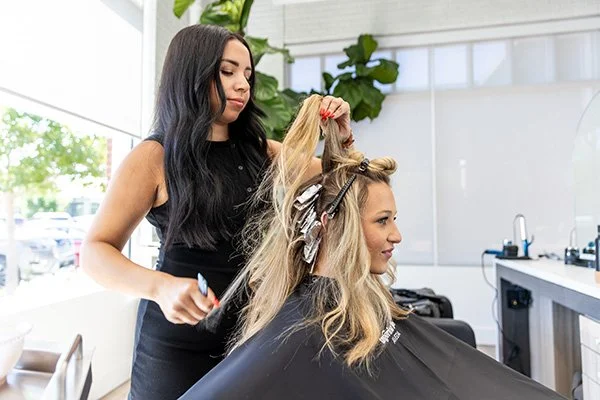
Going from blonde to brunette sounds simple — you're adding color back, not removing it. But in practice, it is one of the most technically nuanced color services a colorist performs. Done without the right approach, it results in flat, muted, muddy-looking color that drains the skin and makes hair look dull rather than rich. Done correctly, it produces deep, luminous brunette with dimension and movement that actually looks better than the blonde it replaced.
The difference is almost entirely in technique. And technique — which approach, in what sequence, with what products — is exactly what this guide covers. Whether you want to fully go back to brunette, soften your blonde gradually with a shadow root, or meet somewhere in the middle with a lived-in brunette that still has some brightness, there is a right path for your hair specifically. Our Aveda colorists at Tangerine walk through this decision with clients across all five Dallas-Fort Worth locations every day. This is how they think about it.
Why Blonde to Brunette Is More Complicated Than It Sounds
The instinct is to think that adding color back to bleached hair is simple — you're filling, not removing. But bleached and lightened hair has a fundamentally altered structure. The lightening process breaks down the melanin that gives hair its natural color, and in doing so opens the hair's cuticle and removes the underlying pigment that any deposited color sits on top of. Without that underlying pigment, a brunette shade applied directly to bleached hair has nothing to anchor to — it deposits unevenly, pulls warm, ashy, or green depending on the formula, and fades rapidly within a few washes.
This is why the first step of virtually every blonde-to-brunette transition is not "apply brunette color." It is a filling step that rebuilds the missing warm pigment in the hair's cortex before the target color is applied. Skip the fill, and the brunette will never sit correctly on the hair — no matter how good the formula. Our colorists at Dallas, Coppell, Frisco, Allen, and Highland Village perform this fill as a standard part of every blonde-to-brunette service — it's not an add-on, it's the foundation of a result that lasts.
The Four Stages of a Blonde-to-Brunette Transition
Every blonde-to-brunette transition at Tangerine follows the same logical sequence — though the depth of each step and whether all four are needed in a single appointment varies by how light your hair is and how dark you want to go. Here is the complete picture.
A color fill deposits warm, orange-gold tones into the cortex of bleached hair to recreate the underlying pigment layer that was removed during lightening. Without this step, cool brunette shades pull green, blue-grey, or flat on very light hair. The fill is typically a warm copper or amber shade applied before the target color — it stays on for 20 to 30 minutes, then the brunette formula is applied directly on top without rinsing. The fill is invisible in the final result; its only job is to give the brunette shade something correct to sit on.
The brunette color is applied over the filled hair, but not as a flat, single-process all-over color. A flat application on hair with any previous balayage or highlight work erases all the dimension and produces the muddy, one-note result that makes many blonde-to-brunette transitions disappointing. Instead, your colorist works in sections — applying deeper tones at the root and mid-shaft while pulling lighter formulas through sections that will become the visible dimension in the finished brunette. The goal is a brunette that looks rich and multi-tonal, not flat. Ask about this at your color consultation.
After the brunette is applied and rinsed, a gloss or toner unifies the overall tone and adds mirror shine across the entire result. The gloss seals the cuticle that was opened during the color process, locks in the brunette tone, and corrects any remaining warmth or brassiness that the fill and formula together didn't fully address. It also dramatically improves the finish — the difference between a glossed brunette and an un-glossed brunette is immediately visible in the shine, depth, and evenness of the result.
Brunette applied to previously lightened hair fades faster than brunette on virgin hair — the open, porous cuticle releases color molecules more quickly between washes. A consistent home routine is what separates a brunette that looks rich at four weeks from one that looks faded and warm. At minimum: a color-safe shampoo, a weekly bonding masque, and a standalone gloss refresh appointment every eight weeks. The full color maintenance guide covers every step of this routine in detail.
Three Approaches to the Transition — Which One Is Right for You
Not every blonde-to-brunette client wants the same result. Some want to fully commit; others want to ease in gradually; others want to stay blonde at heart but add depth. Our colorists offer three distinct approaches depending on your goal, your current color, and your maintenance tolerance.
A full color service that takes the entire head to the target brunette shade — using the fill-plus-formula sequence and dimensional application described above. The result is a rich, all-over brunette with visible depth variation that prevents the flat, painted-on look. Best for clients who are fully ready to leave blonde behind and want maximum richness and longevity.
Best for: Fully committing to brunette · Most impactful single-session resultRather than a full all-over application, your colorist builds a dark, blended root (the shadow root) and hand-paints deeper brunette tones through the mid-lengths using the reverse balayage technique — leaving some of the existing blonde at the ends to create a graduated transition. This preserves lightness at the ends while adding depth and richness everywhere else. It is the lower-commitment, grow-it-in approach that lets you test brunette without a full switch.
Best for: Testing brunette gradually · Maintaining some brightness · Lower maintenanceThe most popular hybrid result: predominantly brunette at root and mid-shaft with selective lighter sections left through the lengths that read as sun-kissed dimension rather than obvious highlights. This is achieved by applying the brunette formula selectively — covering most of the blonde but intentionally leaving certain sections lighter to create movement. A warm gloss ties everything together into a seamless, natural-looking result. This is the look most clients mean when they say they want to "go brunette but keep some life in it."
Best for: Most natural-looking result · Clients who love some brightness · Highly wearableGoing from blonde to brunette is significantly less damaging than going from brunette to blonde. You are depositing color rather than removing it — a process that uses much lower developer volumes and does not require bleach. For hair that is already lightened, the transition is actually an opportunity to improve the hair's condition: the color fill adds back some of the pigment structure that bleaching removed, and a professional color service at Tangerine includes Aveda Botanical Repair™ bonding treatment that actively rebuilds strength during the appointment.
The one caveat is hair that has been extremely over-lightened or is significantly damaged. In those cases, your colorist may recommend a series of conditioning treatments before the color service to restore enough integrity for the color to deposit and hold correctly. A thorough consultation before any color appointment addresses this — there are no surprises at Tangerine. Read more on protecting hair through color services in the healthy hair guide and the color service prep guide.
What to Expect: A Realistic Transition Timeline
How long the full transition takes — and how many appointments it involves — depends almost entirely on how light you are starting and how dark you want to finish. Here is an honest timeline for the most common scenarios.
Medium brunette
Deep/dark brunette
Lived-in brunette

Lived-in brunette with blonde dimension — the most requested blonde-to-brunette result at Tangerine
Keeping Your Brunette Rich Between Appointments
Brunette on previously lightened hair is high-maintenance relative to brunette on natural hair — the porous cuticle releases color more quickly, and warm tones tend to surface sooner than the formula intended. Three habits make the biggest difference.
Wash with cold or cool water. Hot water opens the cuticle and accelerates color molecule release. Cool water keeps the cuticle sealed and extends color vibrancy by weeks over the course of a maintenance cycle. It costs nothing to implement and is the single highest-return habit for color longevity.
Use a color-safe, sulfate-free shampoo. Sulfates are surfactants that strip color efficiently — effective for cleansing, destructive for color retention. Aveda's Color Conserve™ shampoo and conditioner are formulated specifically to extend vibrancy in color-treated hair. Pair with a weekly bonding masque — either Botanical Repair™ or Color Conserve™ Strengthening Treatment — to maintain moisture and color evenness through the shaft.
Book a gloss refresh at eight weeks. A standalone gloss appointment is a 30-to-45-minute service that refreshes the brunette tone, adds significant shine, and extends the life of the full color appointment by four to six weeks. Most clients who maintain a gloss schedule at eight weeks extend their full brunette appointments to every 14 to 16 weeks instead of every 10 — a meaningful saving in both time and cost. Book your gloss at any of our five locations directly through online booking.
Frequently Asked Questions
How long does blonde-to-brunette color last?
The full brunette result typically lasts eight to twelve weeks before a gloss refresh is warranted, and twelve to sixteen weeks before a full color appointment is needed. Hair that was very light blonde before the transition fades slightly faster than hair that started at a medium blonde, because the cuticle is more porous from more intensive lightening history. A consistent home care routine — color-safe shampoo, weekly masque, cool-water rinses — significantly extends these intervals. With a gloss at eight weeks, most clients comfortably maintain their full appointment at the fourteen-to-sixteen-week mark.
Can I go back to blonde after going brunette?
Yes — but the reverse is significantly more complex than the initial transition. The brunette color molecules deposited during the blonde-to-brunette service must be removed before lightener can work evenly, typically through a color removal treatment or a series of lightening sessions. The hair's condition after that process determines how quickly re-lightening can safely begin. If you think you may want to return to blonde at some point, tell your colorist at your initial consultation — they may recommend a more gradual approach (like the shadow root or lived-in brunette) that preserves more of the underlying blonde structure and makes the eventual reversal easier and less damaging.
What shade of brunette suits former blondes best?
Former blondes almost always look best in warm brunettes rather than cool, ash-toned brunettes — because the warm tones complement the skin tones that blonde clients tend to have, and because warm undertones are much easier to maintain on porous, previously lightened hair. Ash brunettes require ongoing toning maintenance to stay cool because the underlying warmth from the fill and the natural fading cycle continuously push the hair warmer. Caramels, chestnuts, warm chocolates, and rich mahogany shades are the most flattering and most maintainable choices. Your colorist will recommend the specific shade at your Dallas or Frisco consultation based on your skin tone and eye color.
What is reverse balayage and is it the same as going brunette?
Reverse balayage is the technique of hand-painting darker tones into hair that has become too light, one-dimensional, or overly blonde — restoring depth and contrast. It is one method used in a blonde-to-brunette transition, but it is not the same as a full color service. Reverse balayage selectively adds depth while preserving some of the existing lighter sections; a full brunette application covers the entire head. The two are often combined in the lived-in brunette approach. The full breakdown of balayage technique types — including reverse balayage — explains when each is used and what result each creates.
What if I want a brunette with red or auburn tones?
Red and auburn tones are entirely achievable in a blonde-to-brunette transition — and are actually among the most natural-looking results on previously lightened hair because the color fill step naturally deposits warm, red-adjacent tones that can be extended into the final formula. A strawberry brunette, chestnut with red warmth, or rich auburn all work beautifully on former blondes. The lived-in color and strawberry blonde guide covers warm, red-toned color in depth if that direction interests you.
Book Your Color Consultation
Aveda colorists at all five Dallas-Fort Worth locationsReady to Make the Change?
Every blonde-to-brunette transition at Tangerine starts with a complimentary consultation. Your colorist will assess your current color, discuss your goal, and map the exact sequence of steps — so you know what to expect before the appointment begins.
Book a Free Consultation