
The Benefits of Balayage for All Hair Types
Balayage Works on Your Hair
Dark hair. Curly hair. Short hair. Fine hair. The technique adapts — it's the approach that changes. Here's exactly what balayage looks like on every hair type and what to expect from yours.
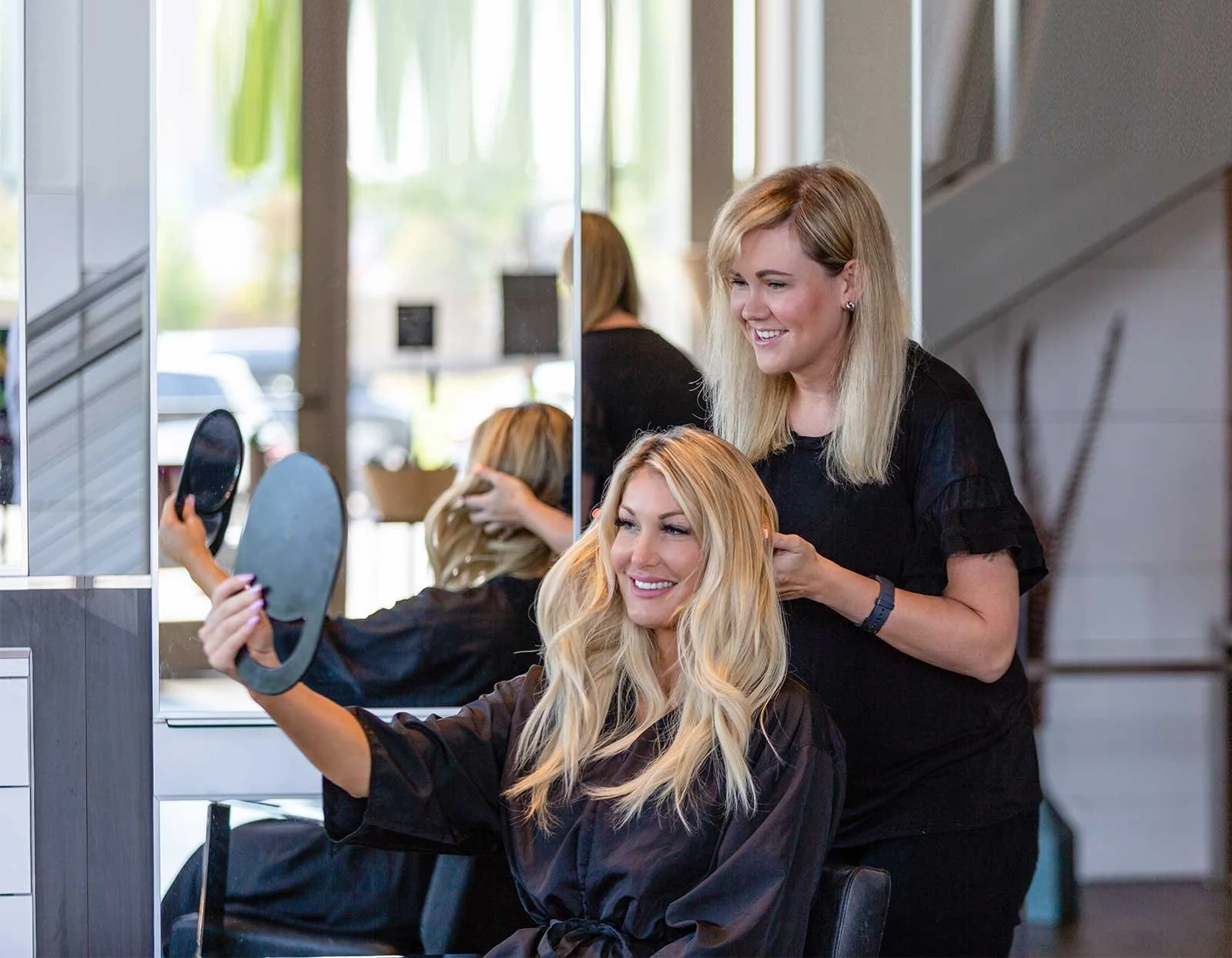
The most common thing our colorists hear from new clients is some version of: "I want balayage, but I'm not sure it works on my hair type." Dark hair. Very curly hair. Short hair. Fine hair that might not hold color. In almost every case, the concern is based on a misunderstanding of what balayage actually is — not a real limitation of the technique.
Balayage is a freehand painting method, not a fixed result. The look it creates is entirely determined by the colorist's choices: which sections to paint, how much lightener to apply, which technique to use, and how far to lift. Those variables are adjusted for every client — for their natural color, their texture, their hair's condition, and the result they want. What works on fine, light-brown hair is completely different from what works on thick, dark-brunette hair. Both are balayage. Both are beautiful when done correctly.
This guide covers how balayage works specifically on dark hair, curly and textured hair, short hair, and fine hair — the four types our clients most often ask about. If you want to understand the full range of balayage techniques before diving into hair type specifics, the complete balayage technique guide covers classic, foilayage, reverse balayage, and money pieces in detail.
Balayage by Hair Type
Each hair type section below answers the specific question directly — can you get balayage on this hair, what technique works best, and what results to realistically expect — because that is exactly what our Aveda colorists at Tangerine walk through during every consultation.
Can you get balayage on dark hair? Yes — and it is one of the most requested color transformations our colorists perform across all five Tangerine locations. The key distinction for dark hair is technique: classic open-air balayage alone typically cannot lift dark hair to the bright, visible dimension most clients are looking for. Dark hair requires more lifting power, which is why foilayage — the hybrid technique that combines freehand balayage painting with foil wrapping — is the standard approach for brunettes, dark brown, and black hair.
The foil traps heat and moisture around the painted sections, dramatically increasing the lift. This allows the colorist to achieve caramel, honey, rich amber, and even lighter blonde tones on a dark base — all while keeping the result blended and rooted rather than stripy. The freehand painting means the transition from root to lightened sections is soft, not abrupt.
Realistic expectations for dark hair: the first session typically lifts two to three levels, creating warm dimension. Reaching very light results — platinum or bright blonde on black or very dark brown hair — almost always requires a second session scheduled six to eight weeks after the first to avoid excessive stress on the hair shaft in one sitting. Our colorists at Dallas, Frisco, and Coppell will give you an accurate assessment of what's achievable in one session versus two at your consultation.
Does balayage work on curly hair? Not only does it work — it often looks more natural on curly hair than on straight hair because the movement of the curl distributes the painted sections in a way that mimics exactly how the sun would naturally lighten coily and wavy hair. The challenge is not whether balayage works on curls; it is whether the colorist understands how to apply it correctly on a curl pattern.
The technique difference for curly hair is significant. Curly hair must be assessed and colored in its dry, natural state — not stretched or blown out — because curl patterns shrink considerably once dry, and color applied to wet, stretched curls often ends up in the wrong position after the hair dries and recoils. Our colorists section and paint curly hair dry, working with the natural curl clumps rather than against them. This requires more time and a different eye for placement, but the result is dimensional, believable color that moves with the curl.
Curly hair that has been lightened also needs more intentional post-color care. The lightening process opens the cuticle, which on already-porous curly hair can reduce definition and increase frizz if not managed with a bonding treatment during the service and a consistent home repair routine after. Every balayage on curly hair at Tangerine includes Aveda Botanical Repair™ as standard — and your colorist will build a home routine recommendation around Aveda's Nutriplenish system to maintain both the color and the curl pattern.
Can you get balayage on short hair? Yes — and short hair often benefits more visibly from balayage than long hair because dimension shows up more dramatically on less canvas. A pixie cut, bob, or lob with well-placed balayage looks exponentially more intentional and polished than the same cut with flat, single-process color.
The technique shifts for short hair. Traditional mid-length-to-ends painting doesn't apply when the ends are at the chin or above. Instead, short-hair balayage focuses on face-framing money pieces — concentrated lightness around the face and part line — combined with subtle dimension painted through the crown and sides. The goal is to create the impression of natural, sun-kissed depth variation that makes short hair look deliberately styled and multi-dimensional at every angle.
Short balayage appointments are also faster and more affordable than long-hair balayage for this reason — there is simply less surface area to cover. Face-framing money pieces on short hair can take as little as 60 to 90 minutes and last up to 16 to 20 weeks before needing a refresh, making it one of the lowest-maintenance balayage options available. It is also an excellent entry point for clients who have never had a color service and want to test balayage without a full commitment. Ask about it at your Allen or Highland Village consultation.
Does balayage work on fine hair? Yes — but fine hair requires a more restrained hand than thick or coarse hair. The challenge with fine hair is not holding color (fine hair actually lifts and deposits color efficiently); it is that over-lightening fine hair reduces its already-limited volume and can make it look flat, stringy, or damaged if too much of the shaft is processed.
The strategy for fine hair is strategic sparseness: fewer painted sections placed for maximum visual impact rather than comprehensive coverage. When balayage is painted on fine hair correctly, it creates the illusion of depth and volume — the contrast between lightened and darker sections makes the hair appear fuller and more textured than it actually is. Over-lightening eliminates that contrast and collapses the visual dimension. The goal is always to enhance what fine hair does well, not to fight its natural character.
Fine hair that has been lightened also benefits significantly from a regular gloss or toner service every six to eight weeks. The gloss seals the cuticle, adds weight and shine, and refreshes the tone without re-lightening — which is exactly what fine hair needs between full balayage appointments. Pair with Aveda's lighter Botanical Repair™ leave-in rather than heavier masque formulas to avoid weighing the hair down. Our healthy hair guide has more on maintaining strength and body in fine hair between appointments.
The Dallas Cowboys Cheerleaders represent nearly every hair type in the squad — from very fine, light blondes to dark brunettes. What they share is a consistent, high-impact look that holds up under stadium lighting and on camera. Our colorists achieve that across all of them using the same principle that applies to every client: the technique is adapted to the hair, not forced upon it. See how those transformations come together during DCC Makeover Day — the annual color event featured on Netflix.
Balayage Maintenance by Hair Type — What to Expect
One of the most practical questions at any balayage consultation is how often you'll need to come back in. The answer varies meaningfully by hair type, technique, and your starting color. Here is the honest breakdown across every type we've covered — plus what you can do between appointments to extend each one.
| Hair Type | Technique | Touch-Up Interval | Between-Visit Recommendation |
|---|---|---|---|
| Dark Hair | Foilayage | 10–14 weeks | Toner refresh at 6–8 weeks; color-safe shampoo; Botanical Repair™ weekly |
| Curly / Textured | Classic balayage (dry) | 12–16 weeks | Nutriplenish™ deep moisture masque weekly; gloss at 8 weeks; satin pillowcase |
| Short Hair | Money pieces + dimension | 14–20 weeks | Toner to maintain tone; heat protectant every styling session |
| Fine Hair | Sparse classic + gloss | 12–16 weeks | Gloss every 6–8 weeks; lightweight leave-in only; UV protection in summer |
| Color-Treated | Reverse balayage or refresh | 12–16 weeks | Botanical Repair™ twice weekly; purple shampoo 1x/week for blondes |
Balayage + Extensions: Any Hair Type, More Impact
For clients whose primary concern is not just color but also length or volume — particularly fine hair or hair that has been shortened by damage — Bellami Professional extensions paired with a custom balayage create a result that neither service achieves alone. The balayage provides the color dimension; the extensions add the length and density that make that dimension visible from a distance.
Our extension specialists and colorists coordinate from the first consultation — the extensions are custom-tinted to match the balayage precisely so the blend is seamless. For fine hair clients especially, this combination resolves the two most common concerns simultaneously: the hair looks fuller and longer, and the color dimension makes it look styled and intentional rather than thin. Read the full Bellami extensions guide to understand how the method, maintenance, and cost break down before your consultation.
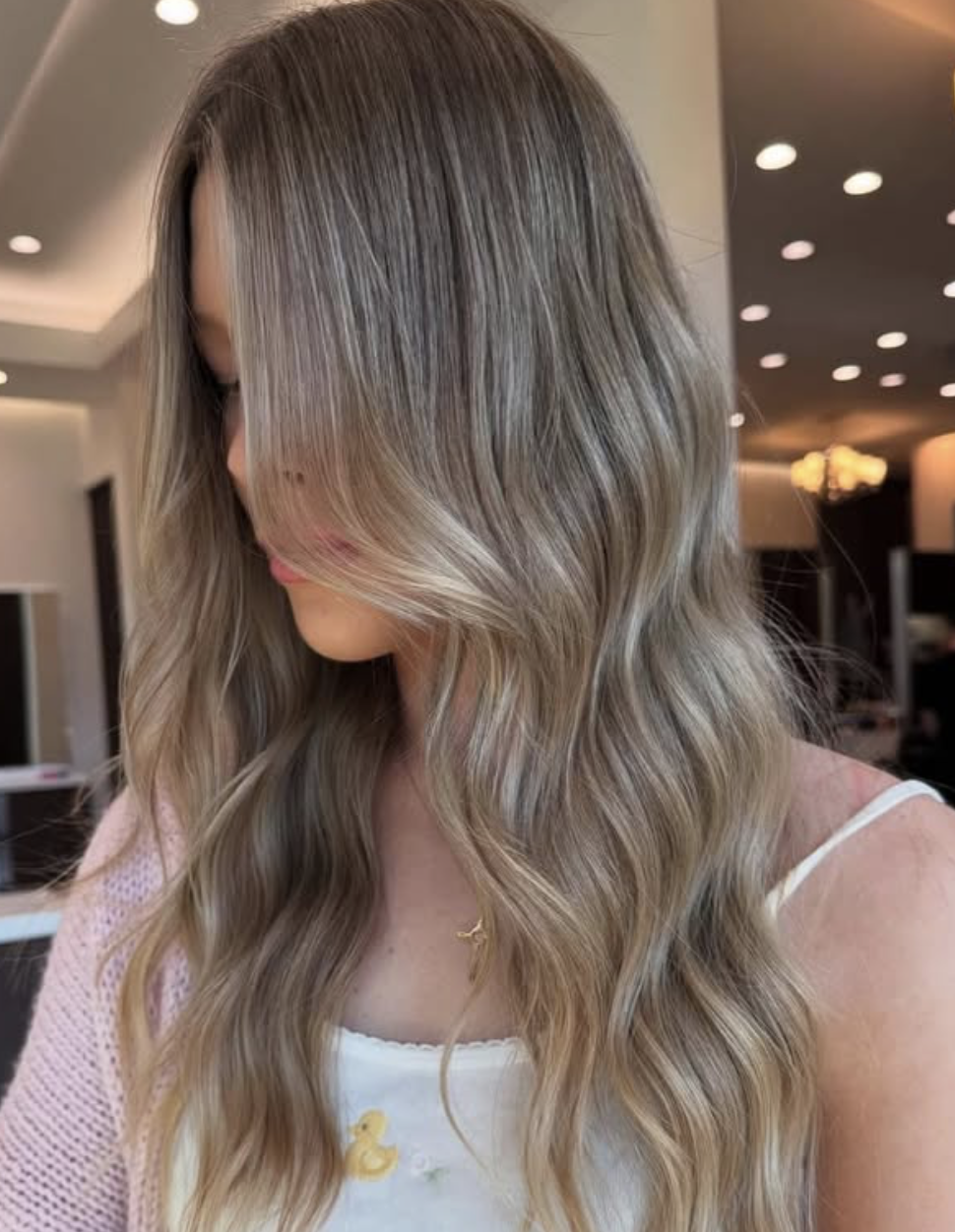
Custom balayage by Tangerine Salon Aveda colorists — adapted for each client's natural hair type
Frequently Asked Questions
How many sessions does balayage take on very dark hair?
It depends on how light you want to go. For warm brunette tones — caramels, honeys, or rich ambers — one foilayage session is typically enough to achieve visible, beautiful dimension on dark brown or dark brunette hair. For lighter targets — bright blonde, platinum, or champagne tones — on very dark brown or black hair, two sessions spaced six to eight weeks apart is the responsible approach. Attempting to lift very dark hair to very light tones in a single session requires aggressive lightener concentrations that can compromise the hair's structural integrity. Our Dallas and Frisco colorists will tell you exactly what's achievable safely in your consultation — no guesswork.
Will balayage damage my curly hair?
Any lightening service changes the hair's internal structure, and curly hair is naturally more porous than straight hair — which means it requires more careful management post-color. However, balayage done correctly on curly hair, with a bonding treatment built into the service and a targeted home care routine after, does not result in lasting damage. The key is an experienced colorist who understands curly hair specifically — one who paints the hair dry, uses an appropriate developer strength for the texture, and includes Botanical Repair™ in the service. What creates damage is an inexperienced application, not the technique itself.
Does balayage work on highlighted hair?
Yes — transitioning from foil highlights to balayage is one of the most common services we perform. If your highlights have grown out with a visible root line, balayage can soften that demarcation into a blended, lived-in transition that looks intentional rather than overdue. Your colorist may combine reverse balayage (adding depth near the roots to blend) with a toner or gloss (to unify the tone across the lengths) to make the transition seamless. The balayage vs. highlights guide covers this transition in detail.
Can fine hair hold balayage color?
Fine hair actually takes color very efficiently — its thinner shaft means the lightener penetrates quickly and the color deposits evenly. The management question for fine hair is not about holding the color, but about maintaining the hair's integrity and volume after lightening. A few practices make a significant difference: using a lightweight Botanical Repair™ leave-in (not a heavy masque), scheduling a gloss every six to eight weeks instead of waiting for the full appointment, and keeping heat tool use moderate. Fine hair with well-maintained balayage can look as dimensional and healthy as any other texture.
What is the right balayage for my hair specifically?
The only way to get an accurate answer is a consultation with one of our Aveda colorists. They will look at your natural color, your hair's texture and condition, your lifestyle, and your goal — and recommend the technique or combination of techniques that fits. Consultations are complimentary at all five locations. Book at Dallas, Coppell, Frisco, Allen, or Highland Village — and come in knowing that the technique will be built around your hair, not the other way around.
Book Your Balayage Consultation
Aveda master colorists at all five DFW locationsYour Hair Type Is Not a Limitation
Every balayage at Tangerine starts with a complimentary consultation. Your colorist will assess your hair, recommend the right technique, and give you a transparent quote — so you know exactly what to expect before the appointment begins.
Book a Free Consultation