
The Art of the Haircut: Finding the Perfect Style for You
The Art of the Haircut: Finding the Perfect Style for You
Face shape, texture, lifestyle — the three axes every great cut is built around.
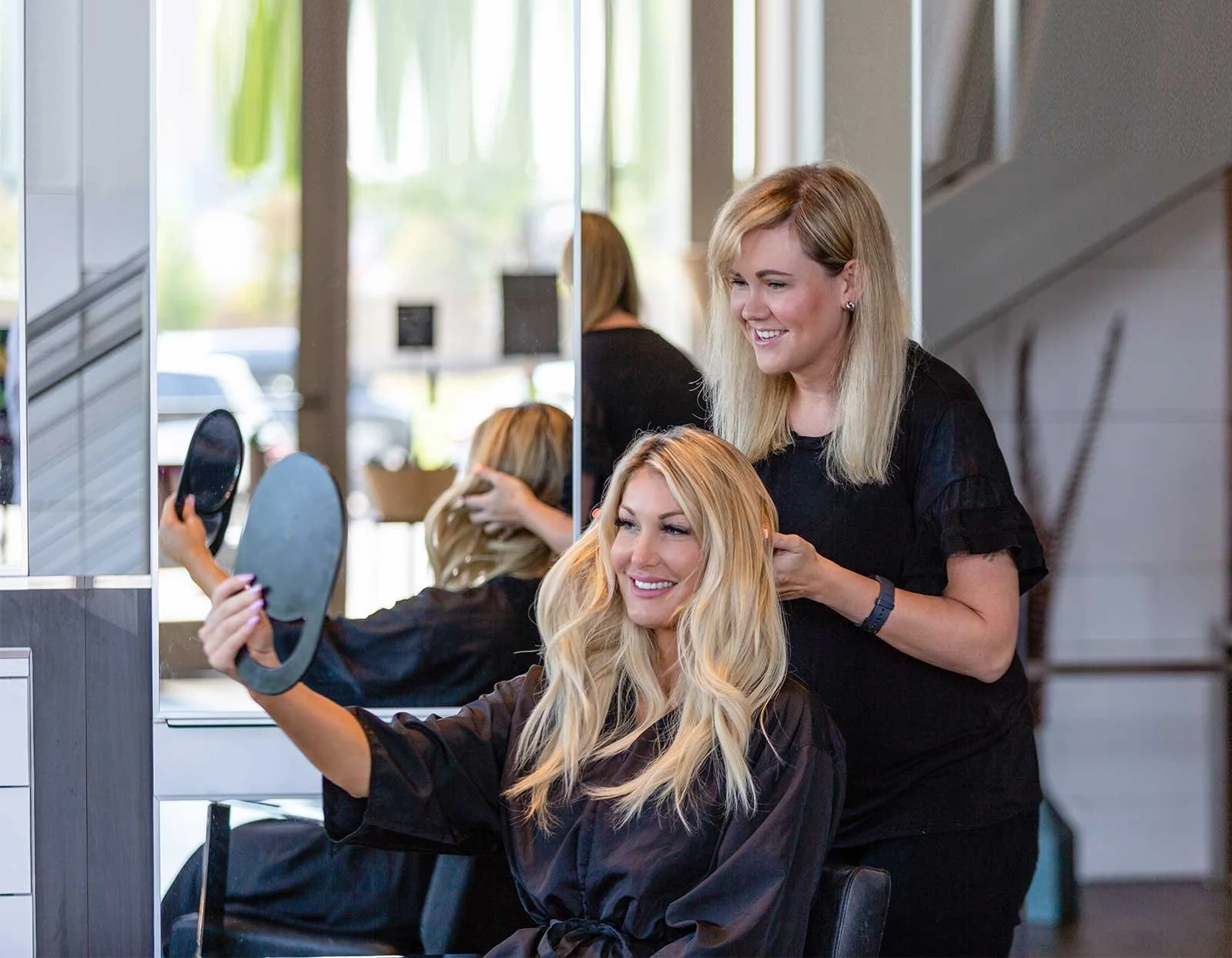
A great haircut doesn't happen by accident. It's the result of a stylist who understands three things simultaneously: the geometry of your face, the behavior of your specific hair, and the reality of your daily routine. Get all three right and the cut practically styles itself. Miss one of them and you're fighting your hair every morning.
This guide covers the framework Tangerine's stylists use when approaching every new haircut consultation — not as a rigid set of rules, but as a starting point for a conversation about what will actually work for you. Browse our transformation gallery to see these principles in action across dozens of real guests, or book a consultation at any of our five DFW locations to get a recommendation built specifically for your hair.
Haircuts by Face Shape
Face shape is the most discussed — and most misunderstood — factor in haircut recommendations. The goal isn't a rigid formula but understanding which proportions flatter your features. Most people fall between two shapes, which is why a skilled stylist matters more than any chart.
Oval is considered the most balanced face shape — almost any cut works well. The primary consideration is less about shape and more about texture and lifestyle. Blunt bobs, long layers, pixies, curtain bangs — all flattering. The main pitfall for oval faces is adding too much volume at the sides, which can widen the appearance and throw off natural balance.
Avoid: excessive side volume, very wide barrel curls at the cheekbones.Round faces benefit from cuts that create the illusion of length — long layers, side parts, and styles that fall past the chin to elongate the face. Curtain bangs work beautifully for round faces; blunt, full fringes across the forehead do not. Asymmetry is a round face's friend — a slightly off-center part or angled lob adds the definition that soft symmetrical cuts can flatten.
Avoid: blunt full fringes, chin-length bobs that hit at the widest point, very short layers.Square faces have strong bone structure that looks exceptional with the right cut — the goal is to soften the jawline without hiding it. Layered cuts that fall past the jaw, beach waves, and soft side-swept bangs all complement square faces well. The lob (long bob) cut to collarbone length, with layers that frame the face and move at the jaw rather than bluntly hitting it, is a classic for this face shape.
Avoid: blunt cuts that end exactly at the jaw, very straight all-one-length styles.Heart-shaped faces benefit from cuts that add width at the jaw and chin while drawing the eye down from a wide forehead. Side-swept or curtain bangs soften a prominent forehead without covering it. Chin-length bobs and lobs that add volume at the lower half work well. Long, straight styles without layers can overemphasize the taper toward the chin.
Avoid: volume concentrated at the crown, very short pixies without careful layering.Diamond faces need width added at both the forehead and chin to balance prominent cheekbones. Side-swept bangs or full fringes add width at the brow; chin-length styles or cuts with volume at the ends add width at the jaw. Styles that sit at the cheekbone — exactly the widest point — exaggerate the diamond shape rather than balancing it.
Avoid: cuts ending at the cheekbone, sleek center-parted styles with no volume at brow or jaw.Oblong faces benefit from cuts that add width and break up length rather than elongating further. Layers at the sides, full bangs or fringe across the forehead, and styles with volume at the sides all help. Avoid styles that add height at the crown or that fall very long and straight — both extend the face's vertical line. Bobs and medium-length cuts with movement tend to be the most flattering.
Avoid: very long straight styles, high-volume at the crown, center parts with sleek flat sides.
Every Tangerine haircut begins with a consultation — face shape and texture assessment before a single cut is made
How Hair Texture Changes Everything
Face shape tells you the direction; texture tells you what's actually possible. Two people with identical oval faces and identical reference photos can end up with completely different cuts because their hair behaves differently. Understanding your texture is what separates a cut that works from one that requires an hour of styling to look decent.
Fine hair needs cuts that create the illusion of density. Blunt perimeter cuts (rather than lots of layers) make fine hair look thicker. Avoid excessive layering, which removes the bulk fine hair already lacks. A clean blunt lob or bob often outperforms a layered cut for fine-haired guests.
Thick hair benefits from internal layers that remove bulk without shortening length — texturizing through the mid-lengths and ends reduces weight while preserving the overall silhouette. Blunt cuts on thick hair tend to look dense and heavy; movement through layering is key.
Curly hair should ideally be cut dry so the stylist can see how it actually falls. Curl patterns vary dramatically from root to end, and wet cutting can result in a much shorter finish than intended once the curl retracts. Our stylists understand curl-specific techniques including DevaCut-style dry cutting.
Wavy hair has the most versatility — it can wear straight or curly styles depending on how it's dried. The best cuts for wavy hair work with the wave pattern rather than fighting it: long layers that allow the wave to form naturally, and length at the perimeter that prevents the hair from becoming triangular as it dries.
Straight hair is the most unforgiving — every uneven line shows. Precision cutting technique is paramount, and the investment in a skilled stylist is most visible on straight hair. Layers on straight hair need to be placed with intention; poorly placed layers look choppy and grown-out faster.
Color-treated hair — especially bleached or highlighted hair — has a different structural integrity than natural hair. Cut timing matters: regular trims every 8–10 weeks prevent split ends from traveling up the shaft and protect the length you've invested in. Our color maintenance guide covers the full routine.
The Lifestyle Factor
The most technically perfect cut is useless if it requires 45 minutes of styling and you have 10. Before your consultation, think honestly about how much time you actually spend styling, whether you use heat tools regularly, and how often you can realistically return to the salon.
A cut that "grows out well" — one that still looks intentional at 10 or 12 weeks rather than shapeless — is worth discussing explicitly with your stylist. Some cuts, like a pixie or a precision bob, require a 6-week trim schedule to maintain their shape. Others, like a long layered cut, can go 10–12 weeks without looking overgrown. Neither is better; they just suit different schedules.
The Dallas Cowboys Cheerleaders — whose hair Tangerine manages as their official salon partner — need cuts that perform across multiple contexts: structured for game day, polished for appearances, and manageable during a demanding training and performance schedule. Versatility and grow-out behavior are non-negotiable requirements.
That's the same standard we bring to every guest consultation. Browse our stylist profiles to find someone whose expertise matches what you're looking for.
How to Get the Most from Your Haircut Consultation
The consultation is where a good haircut is made or lost. Here's how to walk in prepared to get exactly what you want — and how to help your stylist help you.
Reference photos are valuable, but choose photos of people with similar hair texture and density to yours. A photo of a blowout on thick, coarse hair on someone with fine hair isn't a useful reference — the texture itself is doing the work. Find photos where the hair appears similar to yours in type, not just in length or color.
Tell your stylist exactly how much time you spend on your hair on a typical morning — not your aspirational morning. If the answer is five minutes and a ponytail, that's useful information. A cut designed around your actual behavior will always outperform one designed around who you'd like to be.
Previous color services, chemical treatments, heat damage, or breakage all affect how your hair will behave and what cuts are feasible. Our color consultation prep guide covers what to share — the same principles apply to haircut consultations.
Ask your stylist what the cut will look like at 8 weeks and at 12 weeks. A good cut should transition gracefully rather than looking abruptly grown-out. If you're on a tight budget or a busy schedule, grow-out behavior should be part of the conversation from the start.
A haircut and color service are more effective when planned together. Layers placed to complement a balayage pattern, or a fringe cut to frame a specific tone, creates a more cohesive result than treating them as separate appointments. Our color philosophy post explains how Tangerine thinks about cut and color as one.
Book Your Haircut at Tangerine
Expert cuts at all five Dallas–Fort Worth locationsYour Perfect Cut Starts with a Conversation
Every Tangerine haircut begins with a proper consultation — face shape, texture, lifestyle, and color all considered together. Book at any of our five DFW locations.
Book a Haircut